
 Resources
How Much Does Rehab in Malibu Cost? A Complete Guide to Mali...
Published On 04-02-2026
Group therapy—also known as group counseling—is a widely used, evidence-based form of psychotherapy where one or more licensed therapists guide treatment with multiple participants at the same time. It is a core component of mental health treatment programs, luxury rehab centers, and substance abuse recovery programs.
Group therapy is offered in a variety of clinical settings, including residential rehab centers, outpatient treatment facilities, mental health clinics, hospitals, and private therapy practices. While it can be effective on its own, group therapy is most often integrated into a comprehensive treatment plan alongside individual therapy, psychiatric care, and holistic therapies.
Group therapy programs are tailored based on diagnosis, treatment goals, and therapeutic approach. Below are the most common and effective types of group therapy used in mental health and addiction treatment:
CBT group therapy focuses on identifying and changing negative thought patterns, maladaptive behaviors, and emotional responses. CBT groups are highly effective for:
These groups focus on relationships, communication skills, and social dynamics, helping participants understand how interactions affect emotional well-being and recovery outcomes.
Psychoeducational group therapy teaches clients about their diagnosis, triggers, coping strategies, and relapse prevention tools. These groups are commonly used in addiction rehab, dual-diagnosis treatment, and trauma-informed care.
Skills-based group therapy helps individuals build emotional regulation, distress tolerance, communication skills, and social functioning, often drawing from DBT or CBT frameworks.
Support-focused group therapy provides emotional encouragement, accountability, and shared experience. These groups are especially valuable for people navigating long-term recovery, grief, or chronic mental health conditions.
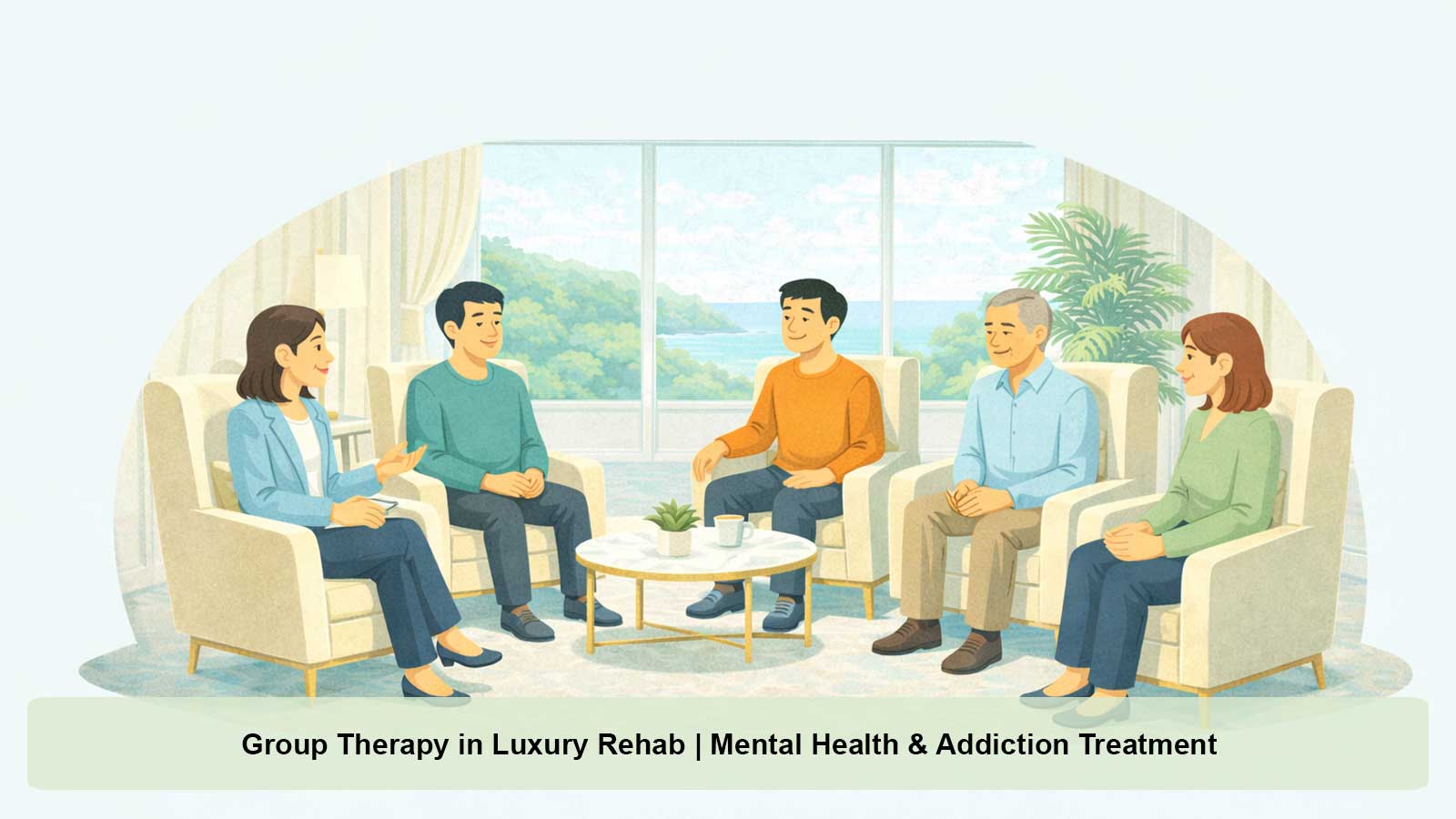
A typical group therapy session takes place in a structured, therapist-led environment—often with participants seated in a circle to encourage open communication and connection.
Sessions may include:
Some groups follow a structured curriculum, while others allow for open process dialogue based on the group’s needs and treatment goals.
Therapists may incorporate a variety of clinically supported group therapy activities, including:
These activities foster self-awareness, emotional insight, and interpersonal growth in a safe, supportive environment.
Group therapy is highly effective for treating a wide range of mental health and substance use disorders, including:
CBT-based group therapy has also been shown to help individuals manage:
According to leading psychotherapy research, group therapy offers several unique clinical advantages:
Participants realize they are not alone—reducing shame, isolation, and stigma.
Group settings allow clients to practice communication, boundary-setting, and emotional regulation in a controlled, therapeutic environment.
Seeing others succeed in treatment builds optimism and commitment to recovery.
Participants gain awareness of relational patterns and receive feedback from both peers and clinicians.
Group therapy promotes consistency, responsibility, and follow-through—key factors in long-term recovery.
Group therapy creates a structured space where clients feel supported, validated, and understood—critical for sustainable recovery.
Clients learn from others at different stages of healing, reinforcing belief in change and growth.
Therapists can directly observe interpersonal dynamics and provide actionable feedback.
Group therapy is more affordable than individual sessions while maintaining strong clinical outcomes.
Group therapy is highly effective—but not ideal for everyone. It may be a strong fit if:
However, individual therapy is recommended for crisis situations, severe suicidality, or acute psychiatric instability.
Many people benefit most from a hybrid approach, combining group therapy with one-on-one counseling and medical support.
High-end and luxury rehab centers integrate group therapy into structured treatment plans for addiction, trauma, and mental health. These programs often feature:
Group therapy remains one of the most effective tools for building connection, insight, and long-term recovery success.
Resources
 Resources
 Resources
 Resources