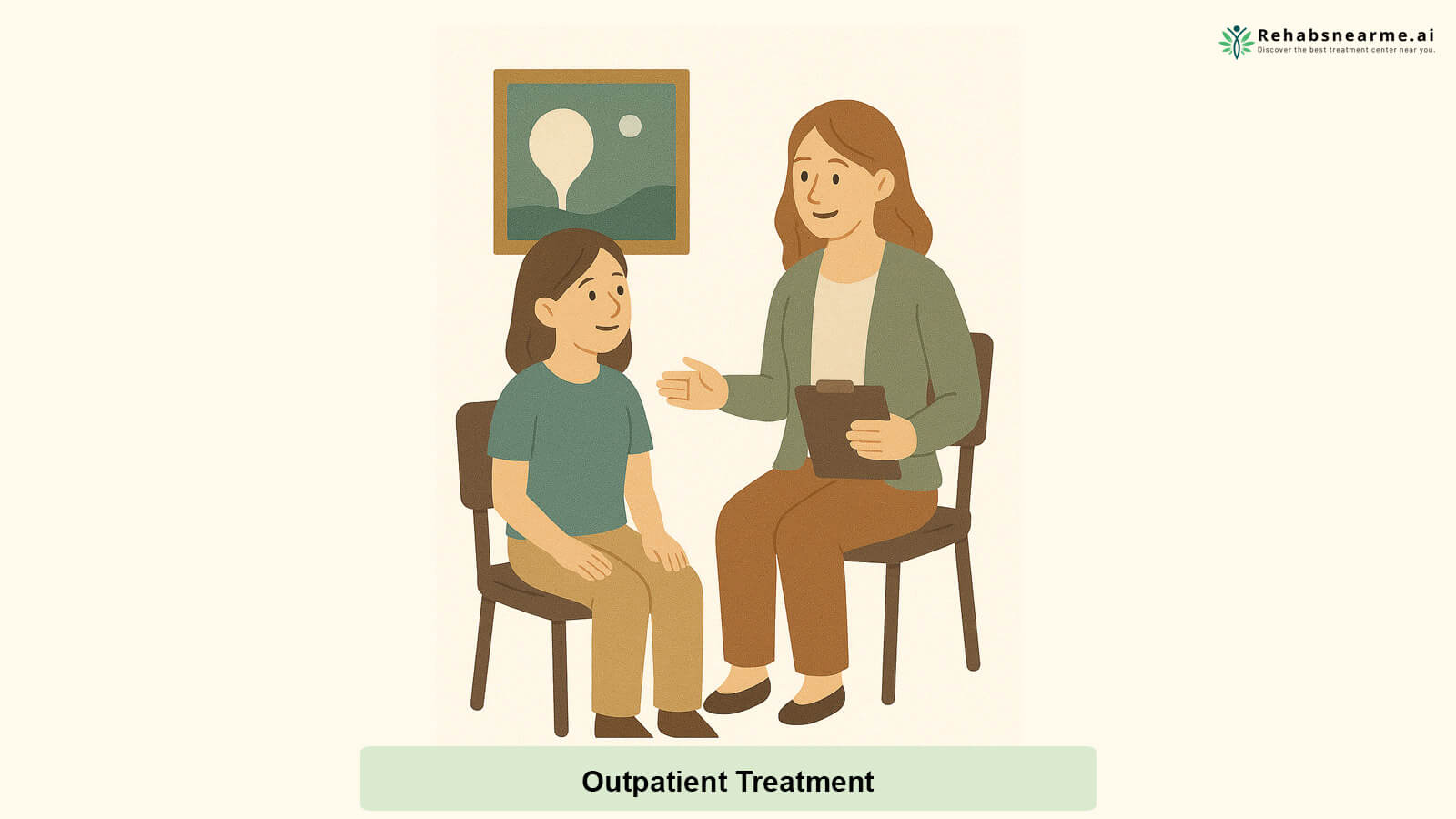
Outpatient rehabilitation is a flexible form of substance abuse treatment that allows you to receive professional care for addiction while still living at home. Instead of staying overnight at a facility, outpatient rehab lets you attend therapy, counseling, and recovery services while continuing work, school, or daily responsibilities.
Outpatient programs vary from partial hospitalization programs (PHPs) to intensive outpatient programs (IOPs) and community-based recovery groups. This guide explains the different types of outpatient drug rehab, what to expect, program length, therapy options, and how to find the best outpatient rehab centers near you.
What Is Outpatient Treatment?
Outpatient addiction treatment provides structured support for individuals who do not require 24/7 medical supervision. Instead of staying in a residential rehab or hospital, clients attend scheduled sessions during the day and return home afterward.
Outpatient rehab for substance use disorders (SUDs) may include:
This level of care helps individuals build coping skills, strengthen support systems, and maintain long-term sobriety. Many outpatient programs also treat co-occurring disorders (dual diagnosis), such as anxiety, depression, or trauma-related conditions alongside addiction.
If you or someone you love is struggling with addiction, outpatient rehab may be the first step toward lasting recovery.
Types of Outpatient Rehab Programs
Outpatient rehabs offer different levels of care, depending on your clinical needs. The two most common types are:
Partial Hospitalization Programs (PHP)
A Partial Hospitalization Program, also known as day treatment, is the highest level of outpatient care. A PHP is ideal for individuals who need structured, intensive support but do not require 24-hour supervision.
Key features of PHP programs include:
- 4–8 hours of treatment per day
- 5–7 days per week
- Medical and clinical oversight
- Support for moderate withdrawal symptoms
- Step-down care from residential or inpatient treatment
PHPs typically last around 3 months, providing a solid foundation for early recovery.
Intensive Outpatient Programs (IOP)
An Intensive Outpatient Program is a step down from PHP but still offers comprehensive treatment.
IOP programs generally provide:
- 6–30 hours per week of structured therapy
- Flexible morning, afternoon, or evening sessions
- Support for individuals with mild–moderate withdrawal symptoms
- Lower cost than residential treatment
- Strong emphasis on relapse prevention and life skills
IOPs allow individuals to maintain work or school while still receiving effective substance abuse treatment.
What Happens During Outpatient Rehab?
During outpatient substance abuse treatment, clients participate in a variety of evidence-based therapies designed to address addiction at its root.
Outpatient rehab services may include:
- Behavioral counseling and psychotherapy
- Assessment and treatment for co-occurring mental health disorders
- Drug and alcohol testing / monitoring
- Case management and support planning
- Life skills training
- Long-term relapse prevention
These services help you build healthier habits, reduce cravings, and create a strong support network for long-lasting recovery.
How Long Do Outpatient Rehab Programs Last?
The length of outpatient treatment depends on your needs, the type of program, and your progress in recovery.
Typical outpatient program lengths include:
- 28–30 days
- 60 days
- 90 days
- Long-term outpatient programs (3–12 months)
Attendance can range from daily sessions to 2–3 visits per week. The best outpatient rehab programs will create a schedule that fits your lifestyle while still meeting clinical requirements.
Therapies Used in Outpatient Treatment Programs
Most outpatient rehab centers use evidence-based therapies proven to help individuals overcome addiction. Common modalities include:
- Cognitive Behavioral Therapy (CBT) Helps you change harmful thoughts, triggers, and behaviors that lead to substance use.
- Contingency Management Uses rewards or incentives to reinforce sobriety and treatment milestones.
- Individual Therapy One-on-one counseling to explore underlying issues like trauma, stress, and emotional triggers.
- Group Therapy Offers support, accountability, and shared experiences with others in recovery.
- Motivational Interviewing (MI) Strengthens your internal motivation to change and commit to recovery.
- Family Therapy Helps repair relationships and improve communication affected by addiction.
Some programs also offer alternative or holistic therapies, and many complement treatment with 12-Step programs like AA or NA.
Benefits of Outpatient Drug Treatment Programs
Outpatient rehab offers many advantages compared to inpatient or residential treatment — especially for individuals with work, school, or family responsibilities.
Top benefits of outpatient addiction treatment:
- Flexible scheduling around your life
- Ability to live at home during treatment
- Lower cost than inpatient rehab
- Access to evidence-based therapies
- Night and weekend programs for busy individuals
- Support for dual diagnosis
- Long-term recovery tools and relapse prevention
Outpatient treatment makes professional addiction care accessible while allowing you to maintain normal routines.