Loading...

Cognitive Behavioral Therapy (CBT): How This Proven Treatment Supports Addiction & Mental Health Recovery

Resources
Published On 14-11-2025
4 min read
Cognitive Behavioral Therapy (CBT): How This Proven Treatment Supports Addiction & Mental Health Recovery

Cognitive Behavioral Therapy (CBT): How This Proven Treatment Supports Addiction & Mental Health Recovery

Starting your journey toward addiction treatment or mental health recovery can feel overwhelming. With so many different types of therapy available, it’s hard to know where to begin. But one evidence-based approach stands out in nearly every reputable addiction rehab or mental health treatment center: Cognitive Behavioral Therapy (CBT).

CBT is one of the most widely used and highly researched therapies in the world. It focuses on reshaping the negative thought patterns that fuel addiction, anxiety, depression, and other mental health disorders. By learning CBT skills inside a rehab program, intensive outpatient program (IOP), or therapy center, you gain powerful tools that support lifelong recovery.

What Is Cognitive Behavioral Therapy?

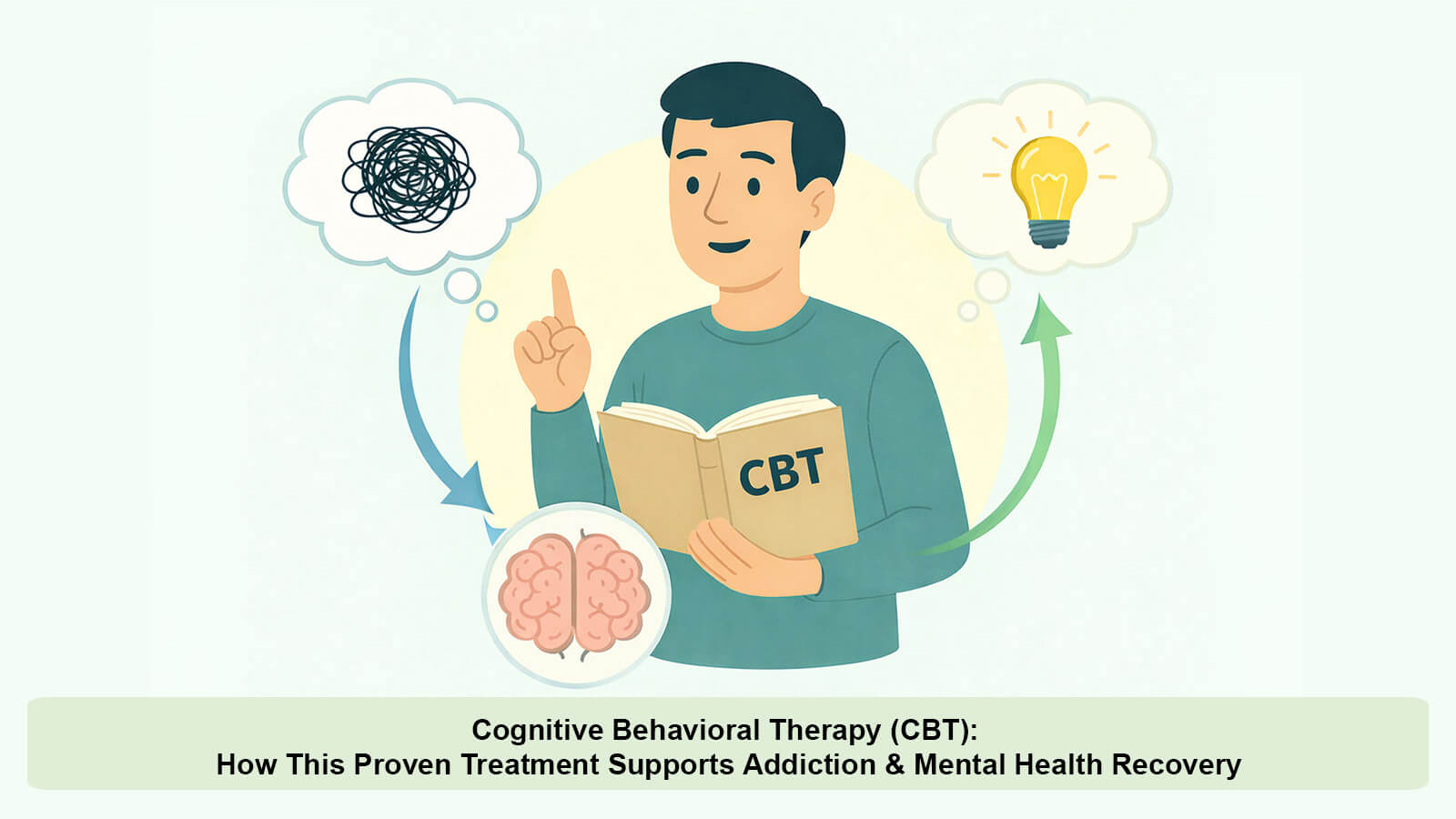
Cognitive Behavioral Therapy teaches you how to identify harmful thoughts, regulate emotions, and respond to triggers in healthier ways. It’s based on the principle that your thoughts influence your feelings and behaviors—and by changing those thoughts, you can change your life.

During CBT, you learn practical strategies to interrupt negative thinking, challenge distorted beliefs, and build healthier coping habits. When these patterns shift, overwhelming emotions become easier to manage, and long-term healing becomes more achievable.

CBT is consistently proven to improve quality of life, reduce symptoms of mental illness, and support long-term addiction recovery. Because it’s structured and goal-oriented, patients see progress quickly and build skills they can use forever.

What to Expect During a CBT Session

CBT is used across individual therapy, group therapy, and family counseling, and it’s effective in both residential rehab programs and outpatient treatment. Most people attend 5–20 sessions, depending on their goals.

Your first CBT session typically includes:

  • Reviewing your history and mental health concerns
  • Defining treatment goals
  • Understanding how your thoughts and emotions interact

In ongoing sessions, you’ll focus on skills like:

  • Exposure Therapy You revisit triggering memories in a safe, controlled environment to reduce emotional distress and rewire your response.
  • Thought Records / Cognitive Restructuring You document negative thoughts, identify patterns, and challenge distortions—similar to guided journaling but more structured.
  • Identifying Cognitive Distortions You learn to spot inaccurate or harmful ways of thinking, such as catastrophizing, black-and-white thinking, or false assumptions.

Over time, these skills become second nature, helping you navigate stress, cravings, and emotional triggers with confidence.

What Conditions Does CBT Treat?

CBT is one of the most versatile and effective therapies available. It’s offered in almost all addiction treatment centers, mental health rehabs, and outpatient therapy programs. It treats a wide range of conditions, including:

Mental Health Disorders

Other Common Issues

CBT for Addiction Treatment

CBT is one of the most effective therapies for drug and alcohol addiction because addiction is both emotional and behavioral. CBT helps you:

  • Understand the connection between thoughts, cravings, and relapse
  • Identify early warning signs
  • Break destructive behavioral cycles
  • Build relapse-prevention skills

Many top rehab programs use CBT as a foundation for treatment because it empowers patients to make healthier choices long after they leave rehab.

CBT for Mental Health Disorders

Because CBT targets the root cause—harmful thought patterns—it is highly effective for many mental health challenges.

CBT for Depression

  • Research shows CBT significantly reduces relapse rates and can be as effective as antidepressant medication. You’ll work on:
  • Challenging negative self-beliefs
  • Reframing everyday experiences
  • Building motivation through small, rewarding behaviors

CBT for PTSD

CBT helps you separate traumatic memories from your current reality, reducing anxiety, hypervigilance, and emotional distress.

Specialized forms of CBT for trauma include:

  • Trauma-Focused CBT (TF-CBT)
  • Prolonged Exposure Therapy (PE)
  • Cognitive Processing Therapy (CPT)

These are commonly offered in trauma-informed rehab programs and outpatient treatment centers.

CBT for Eating Disorders

CBT is the gold-standard treatment for bulimia, binge-eating disorder, and emotional eating. It helps individuals break the cycle of negative thoughts and unhealthy behaviors.

Build Lifelong Skills Through CBT

Recovery—whether from addiction, anxiety, depression, or trauma—is not easy. CBT doesn’t remove obstacles, but it gives you the tools to overcome them. While the therapy itself may be short-term, the benefits and skills can last a lifetime.

If you’re exploring treatment, consider looking at rehabs and mental health programs that offer Cognitive Behavioral Therapy. Many allow you to contact centers directly to ask questions, verify insurance, or schedule an assessment.

Frequently asked questions

Cognitive Behavioral Therapy (CBT) is an evidence-based form of psychotherapy that helps you identify and change negative thought patterns and behaviors that contribute to addiction and mental health issues.

In a luxury rehab, CBT is delivered by licensed therapists in a highly personalized setting. You’ll work one-on-one and in small groups to understand your triggers, reframe negative thinking, and develop healthier coping strategies that support long-term recovery.

CBT is effective for substance use disorders, alcohol addiction, anxiety, depression, PTSD, OCD, bipolar disorder, eating disorders, and many other mental health and behavioral conditions.

Yes. CBT is one of the most researched and effective treatments for addiction. It helps you recognize the thoughts and situations that lead to cravings and relapse, and teaches you how to respond to them in healthier ways.

CBT is typically a short-term therapy. Many clients complete between 5 and 20 sessions, depending on the severity of their symptoms, their goals, and the level of care (residential, PHP, IOP, or outpatient).

CBT is structured, skills-based, and goal-oriented. While other therapies may focus more on insight or processing emotions, CBT emphasizes practical tools you can use every day to manage thoughts, feelings, and behaviors.

Yes. CBT is widely used in residential rehab, partial hospitalization (PHP), intensive outpatient programs (IOP), and standard outpatient therapy, making it a flexible option for different stages of recovery.

You can use RehabsNearMe.ai to search and filter verified luxury rehab centers that list Cognitive Behavioral Therapy (CBT) as one of their core treatment modalities, then contact them directly for more details.

Many insurance plans cover CBT when it is part of medically necessary addiction or mental health treatment. Coverage varies, so it’s important to verify your benefits with the rehab center and your insurance provider.

Yes. CBT is frequently used with executives and high-profile clients because it is discreet, practical, and focused on real-world problem-solving, stress management, and long-term performance and wellness.

Related articles

Top