Effective treatment for substance use disorders (SUDs) requires a personalized plan that accounts for a person’s unique needs, risks, medical history, support system, and long-term recovery goals. Working with a physician, mental health professional, or addiction specialist helps determine the most appropriate level of care. For many people, that level of care is an Intensive Outpatient Program (IOP).
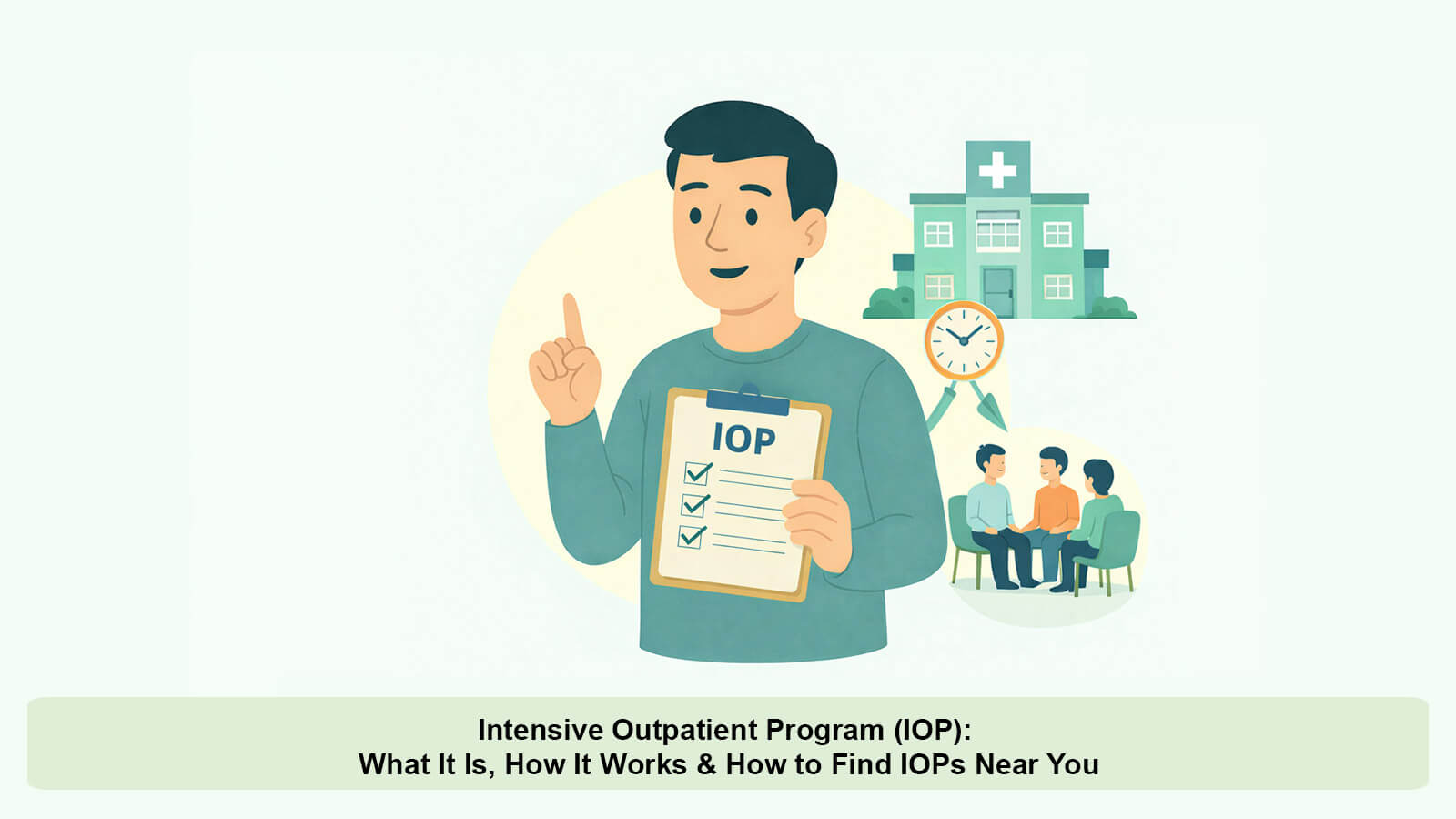
An Intensive Outpatient Program (IOP) is a structured, evidence-based treatment program for individuals who need more support than standard outpatient care—but who do not require medical detox or 24/7 supervision. IOPs provide comprehensive addiction and mental health treatment while allowing individuals to continue living at home and maintaining responsibilities at work, school, or with family.
IOPs typically include:
Most IOPs require a minimum of 9 hours of treatment per week, commonly delivered in three 3-hour sessions. Treatment may take place in hospitals, rehab centers, clinics, or community settings.
Clients in IOPs learn to:
- Identify the emotions and behaviors that drive substance use
- Develop new coping strategies
- Improve problem-solving skills
- Navigate day-to-day triggers while living in their real-world environment
Both inpatient rehab and IOPs offer evidence-based care—but they serve different needs.
- Individuals live on-site at the treatment facility
- 24/7 support and monitoring
- Highly structured environment free of triggers
- May include medically supervised detox
- Best for people with severe addiction, unstable living environments, or high relapse risk
- Individuals live at home or in sober living
- Attend therapy and treatment sessions multiple times per week
- More flexibility for work, school, or family commitments
- Costs significantly less than inpatient rehab
- Can serve as a step-up or step-down level of care
Despite the differences in structure, research shows IOPs can be just as effective as inpatient treatment for many individuals when matched appropriately to their needs.
According to the American Society of Addiction Medicine (ASAM), addiction treatment consists of five levels of care:
- Level 0.5: Early intervention & prevention
- Level 1: Standard outpatient treatment
- Level 2: Intensive outpatient programs (IOP) & partial hospitalization programs (PHP)
- Level 3: Residential or inpatient rehab
- Level 4: Intensive inpatient / medically managed treatment
IOPs sit in the middle of this continuum—offering more support than outpatient therapy but more flexibility (and fewer restrictions) than inpatient rehab.
While each facility designs its own program, most IOPs combine several therapeutic services such as:
- Personalized treatment planning
- Individual psychotherapy
- Group therapy sessions
- Behavioral therapies (including CBT & DBT)
- Motivational Interviewing (MI)
- Psychoeducation
- Medication management
- Family therapy & support
- Crisis intervention
- Drug & alcohol monitoring
- Peer recovery support
- Transportation & childcare
- Vocational, educational, or wellness services
Group therapy is central to many IOPs because it provides peer support, accountability, and practical coping tools.
CBT helps individuals understand how their thoughts influence their emotions and behaviors. Clients learn how to:
- Reframe negative thinking
- Reduce relapse risk
- Strengthen self-control and self-efficacy
- Apply skills in real-world situations while still attending treatment
MI helps clients overcome ambivalence about change. Therapists use a client-centered approach to:
- Increase internal motivation
- Build confidence in one’s ability to stay sober
- Promote personal accountability
This approach introduces clients to the principles of AA, NA, CA, and other 12-Step programs. Benefits include:
- Community support
- Accountability
- A structured recovery framework
Originally developed for stimulant addiction, this highly structured model combines:
- CBT
- 12-Step techniques
- Relapse prevention
- Family involvement
- Regular drug testing
Although IOPs require at least 9 hours per week, program length varies widely depending on individual needs. Many programs last 8–12 weeks, while others may continue for 90 days or longer.
Typical IOP schedule:
- 3 hours per day
- 3–5 days per week
- Morning or evening options for flexibility
An Intensive Outpatient Program may be appropriate if you:
- Have reliable transportation
- Live in a stable, supportive environment
- Do not require 24/7 supervision
- Have mild to moderate withdrawal needs
- Completed inpatient rehab or detox
- Need structured weekly support to avoid relapse
- Have co-occurring disorders that can be treated outpatient
IOPs are often used as:
- An entry point into treatment
- A step-down after residential rehab
- A step-up from standard outpatient care for those needing more support
The best way to know if an IOP is right for you is to consult a physician, mental health provider, or addiction specialist who can assess your needs and recommend the proper level of care.
Frequently asked questions
An IOP is a structured treatment program that provides addiction and mental health therapy several times a week while allowing individuals to live at home.
Most IOPs require a minimum of 9 hours per week, typically delivered across three 3-hour sessions. Some programs offer more depending on clinical needs.
Individuals with a stable living environment, mild to moderate withdrawal risk, reliable transportation, and a need for structured weekly support may be ideal for IOP.
Common therapies include CBT, DBT, Motivational Interviewing, relapse-prevention training, group therapy, and family counseling.
Unlike inpatient programs, IOP clients live at home and attend scheduled sessions. IOPs offer flexibility and lower costs while still providing intensive support.
Most IOPs run for 8–12 weeks, but some may extend to 90 days or longer based on individual progress and clinical recommendations.
Yes. IOPs are designed to accommodate work, school, and family schedules, offering daytime, evening, or weekend options.
No. Detoxification requires medical supervision and is typically completed before entering an IOP.
Many insurance plans cover IOP treatment when medically necessary. Coverage varies, so checking benefits with the provider and treatment center is recommended.
Use RehabsNearMe.ai to browse accredited IOP programs, compare treatment services, and contact centers directly.
Related articles

 Resources
 Resources
 Resources
 Resources